

“Silent Revolutions: Deeds to Habits to Rewards”
By: Sister Mariam Owais
Buffalo, NY
One of my favorite hadith and discussions about Islam is on the topic of moderation and consistency. Islam is a faith rooted in balance and consistent actions, and as believers, we come to find that this is what Allah SWT also loves. In a hadith mentioned in Bukhari, the Prophet SAW said “The most beloved deeds to Allah are those that are consistent, even if small.” In another narration found in Sahih Muslim, Aisha R.A. reported the Messenger of Allah PBUH said, “The acts most pleasing to Allah are those which are done continuously, even if they are small.” When we examine the benefits of small and consistent deeds, we find that they truly give us some sustainability in life and prevent burnout, allowing believers to maintain their relationship with Allah SWT. Moreover, consistency reflects sincerity and dedication as the focus becomes remembering Allah SWT, not just sporadically or when we are in deep moments of remembrance, like Ramadan. Remembering Allah SWT should be a part of our everyday life through praying our Fardh and Sunnah prayers and reciting our morning and evening adhkar. These small and daily steps help nurture spiritual growth and allow us to focus on increasing and maintaining our spiritual progress.
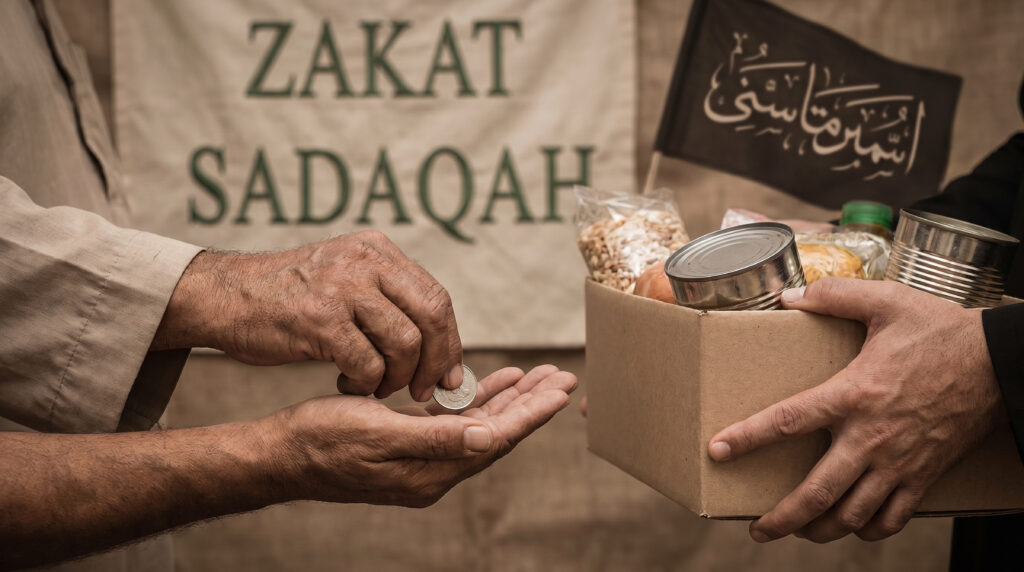
Truly Ramadan carries a special feeling for Muslims, as it is a blessed time, especially in worship. We often feel a stronger connection with Allah SWT during Ramadan, and we can continue to develop this bond post Ramadan if we show some consistency with our deeds. For instance, we can still fast on Mondays and Thursdays or the 13th, 14th, and 15th of each month as recommended by the Prophet PBUH. Charity is another thing that does not end with Ramadan, we can continue to give our sadaqah every day or part of our good deeds on Jummah. The point here is that our connection with Allah SWT does not only start and end in Ramadan, it is consistent throughout the rest of the eleven months in the year. Imam Omar Suleiman writes in his book Allah loves…, “maintaining consistency is a sign of our love for Allah SWT and also is a sign that we are loved by Him as well.” The question most have here is how does our love for Allah SWT affect the consistency in our deeds? He continues to write that scholars explain that “if a person is able to maintain consistency in doing a good deed, that’s actually a testimony of it being sincerely for Allah. Why? Because if one wavers in doing good deeds then it is probably a sign that there are external circumstances that drive the performance or lack of performance of those good deeds.” If a believer can stay consistent with doing good deeds, even if it is small, then their love for Allah SWT is also consistent. Therefore, when a believer remains consistent, even in small deeds, it reflects a steady and sincere love for Allah SWT, regardless of circumstances or emotional state.
To better understand consistency in Islam, we can look at the Makkan period, which spanned 13 years of Prophethood and was a time of immense trials. The response of the Prophet SAW and his companions during the period of persecution and boycott was to persist in their worship and efforts to spread the message of Islam. They remained patient and steadfast in being dutiful to Allah SWT and consistent in their commitment to spreading the Deen. The Prophet PBUH continued to lead prayers, offer advice and guidance, and recite the Quran, regardless of all the setbacks he faced during the Makkan period. In Surah Nahl verse 125, Allah SWT says, “Invite to the way of your Lord with wisdom and good instruction, and argue with them in a way that is best. Indeed, your Lord is most knowing of who has strayed from His way, and He is most knowing of who is (rightly) guided.” The Prophet SAW engaged with people from all backgrounds and even with those who opposed him. The objective was to maintain inclusivity in the community and it was achieved by consistently showing up in the community and interacting with the people. Furthermore, the Prophet SAW and his companions continued to commit acts of charity and spread kindness during the Makkan period despite facing economic hardships. Most importantly, they remained steadfast in their faith and devotion to Allah SWT, continuing their prayers to strengthen their connection with Him Despite being physically harmed, starved, and forced out of their homes, they were consistently committed to maintaining peace and never fought back or showed any violence regardless of all the fighting or retaliation they endured. Their consistency in building their Iman, fearing Allah, and remembering the Aakhirah (hereafter) became the foundation of their strength.
In conclusion, a true believer can see that the dedication and consistency shown in the Makkan period allowed the community to remain committed to their faith and helped prepare them for challenges ahead in Medina. The Prophet SAW demonstrated a progressive approach when it came to his vision for the people in Makkah. He understood these trials were temporary and that there would be a better future ahead. Remaining consistent with our deeds for the sake of Allah SWT encourages a Muslim to stand firm through adversity and paves the way for a brighter future. The period in Makkah is a silent revolution that laid the foundation for the development of an Islamic movement. As Muslims, we learn that remaining consistent with our actions, no matter how small, leads to successes blessed by Allah SWT, the Almighty.

FNOC:12551 Emily Ct
Sugar Land TX 77478
Support Our Mission
Donation checks and money orders are payable to:
ICNA Sisters INC
28610 Hwy 290 F09 #157
Cypress, TX 77433